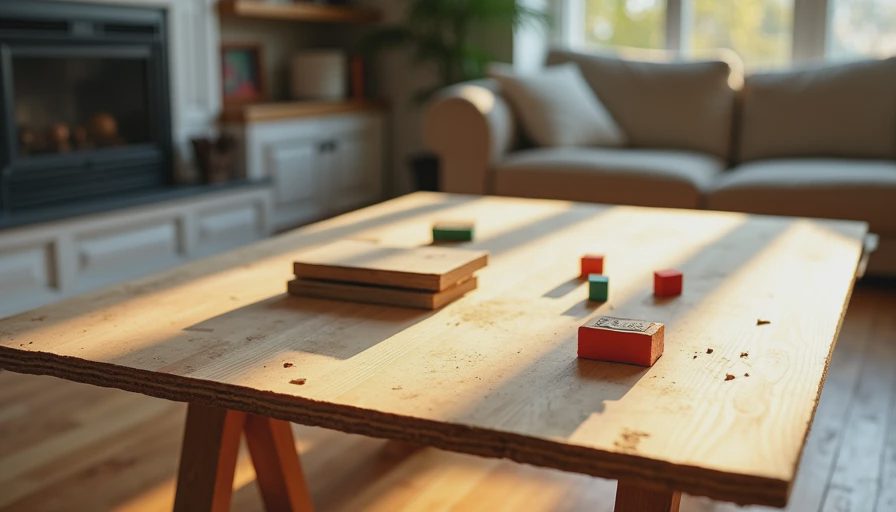
Some renovation stories are about beautiful before-and-after reveals. This one is about the ugly middle that lasted way longer than I expected. For eight straight months, our living room coffee table was nothing more than a 4x2 sheet of plywood balanced on two sawhorses. No stain. No legs. Just raw wood, a few scattered coasters, and a growing collection of toddler fingerprints. And you know what? We survived. We even kind of liked it.
How the Plywood Era Began
Back in early 2023 we were finishing the living room built-ins. The old coffee table — a hand-me-down with a wobbly leg — finally gave up during a particularly energetic Lego session with Leo. Instead of rushing out to buy a new one, I told Megan, “I’ll build something nice once the built-ins are done.”
Famous last words.
The built-ins took longer than planned (surprise — supply chain issues with the lumber we wanted). Then June started walking and climbing everything in sight. Then work got busy. Then we decided the primary bath needed attention. The plywood top I cut as a temporary surface just… stayed. Eight months later it was still there, holding board books, sippy cups, and the occasional forgotten snack.
The Real Life of Living with an Imperfect Table

Let me paint the picture. Every evening we’d clear off the day’s debris — crayon wrappers, half-finished puzzles, a random sock — and actually use the thing. It was surprisingly sturdy. Big enough for Megan to spread out lesson plans while I brewed a beer. The kids treated it like a racetrack for toy cars. No worries about scratching a fancy finish.
But it looked ridiculous. Raw plywood edges, visible sawhorse brackets, and a slight wobble when Leo got too enthusiastic. Friends would come over and politely not mention it. I’d joke, “It’s industrial chic… or post-modern minimalism. Take your pick.”
The truth is, it taught me more about real-life renovation than any perfectly staged photo ever could.
Not everything needs to cost more. Some things just need to be thought about more — and sometimes “good enough for now” is the right decision when life keeps moving.
What the Plywood Taught Us About Priorities
Living with that temporary table forced us to focus on what actually mattered in the living room:
The built-ins turned out fantastic and get used every single day for toys, books, and hiding the TV cords.
Traffic flow around the seating area became obvious once we had the big plywood surface to navigate.
We realized we didn’t need a fancy expensive coffee table — we needed something durable that could handle marker attacks and hot mugs.
The plywood phase gave us time to observe real use instead of guessing. By the time we finally replaced it, we knew exactly what we wanted: a simple oak top with sturdy legs, nothing too precious, something that could age with the kids.
The Day We Finally Upgraded (And Why It Took So Long)
Month nine arrived and I finally had a free weekend. I built a proper base, stained the top a warm medium oak, and added some simple hairpin legs I found on sale. Total cost: about $180. It looks good. It functions even better.
But looking back, those eight months of plywood weren’t wasted. They were research. They were a low-stakes way to test the room’s actual needs while we poured energy into bigger projects. The kids got to be kids without constant “don’t touch that!” warnings. We saved money by not buying something we might have regretted.
Lessons from the Plywood Coffee Table for Every Renovating Family
If your house currently has unfinished projects staring you in the face, here’s what I’d tell you:
Temporary solutions can be liberating. They remove pressure and let you live in the space before committing to permanent choices.
Kids don’t care about perfection. June colored on that plywood more times than I can count. It wiped clean. No tears, no stress.
Observe before you invest. Eight months of use showed us exactly how the room actually functioned — where we needed more surface area, better lighting, and tougher materials.
Embrace the mess. Renovation with young kids is never going to look like a magazine. The photos we took during the plywood era are some of my favorites because they’re honest.
Set a “good enough” deadline. Ours was month nine. Having a loose timeline kept the project from dragging forever.
How It Fits Into the Bigger Picture
This coffee table saga is pure Real Life category material. While Room by Room posts show the big wins and Budget & Trade breaks down the dollars, this category is where we admit that renovation is messy, nonlinear, and often interrupted by actual living.
Our house is still a work in progress. The plywood table is gone, but there’s still a corner of the garage with half-finished furniture flips and a few “someday” projects on the list. That’s okay. The goal isn’t a perfect house — it’s a house that works for the family we actually are right now.
Megan and I still laugh about the plywood era. Leo asks sometimes why the “big brown table” went away. June just climbs on the new one like it’s her personal jungle gym. Life moves on.
If you’re staring at your own version of a plywood coffee table — literal or metaphorical — take a breath. Document it. Learn from it. The imperfect phase often teaches the best lessons.
Next in Real Life I’ll share what a two-year-old taught me about open shelving (spoiler: it involves climbing and lots of broken mugs). Until then, go sit on your own temporary furniture and enjoy the chaos. It won’t last forever.
— Ethan
No letters yet — be the first to write.